
Thassos Marble: The Stone That Shaped the Island’s History
The pine trees, beaches, and summer sun are what most visitors remember about Thassos. But beneath all of it lies a 2,700-year-old marble industry that shaped the island long before tourism arrived. From ancient quarries turned swimming spots to beaches made of white marble pebbles, this is the Thassos most travellers walk right past.
Before the Beaches there was Marble
When I think about Thassos the first things that come to mind are the pine trees, the sandy beaches, the olive trees, the sun, and the summer breeze. But before the island became known as a beautiful summer destination, it was famous for its marble. And by that, I mean long before. Thassos has been mining marble since the 7th century BC, and it remains a popular, luxurious choice for it up to this day, roughly 2,700 years later.
Since ancient times, Thassian marble has travelled all over the Mediterranean. The ancient Greeks used it for temples, statues and public buildings. The Romans exported it across the empire for sarcophagi, columns, and architectural details. Today, the same marble is used for premium large-scale projects, luxury architecture, and high-end interiors around the world.
One of the most famous varieties of Thassian marble is the Thassos Snow White. It is often considered the whitest marble in the world, has almost no veining, is durable and dense, and reflects sunlight at an uncommonly high rate. It was used in the Grand Mosque in Mecca and the Prophet’s Mosque in Medina, the two most important sites in Islam. The marble’s natural reflectivity keeps the stone cool enough for visitors to comfortably walk on barefoot even in 50°C summer heat. The courtyard around the central shrine in Mecca alone is covered with around 1.5 million square metres of the Thassian marble, possibly the largest single marble surface in the world.
Alyki: Where the Story Begins
The marble Thassos was initially known for wasn’t actually white. The first ancient quarry of the island was in Alyki and it produced grey marble. Today there are no active quarries in the area but the traces of more than a thousand years of mining are still visible today.
Marble was cut at Alyki from the 7th century BC until the 7th century AD. Over those centuries, the peninsula itself was heavily carved down and has since further corroded to almost sea level. You can freely walk around the archaeological site today and see column drums left mid-cut in the rock, ruins along the shoreline and chunks of marble lying just under the surface of the water. The name Alyki means salt flat in Greek and comes from the salt that still collects in the old quarry depressions when the sea recedes.
Alyki is also one of the most popular beaches on the island and can get very busy during peak season. Arrive early to secure a roadside parking spot above the peninsula.
Saliara: The Marble Beach
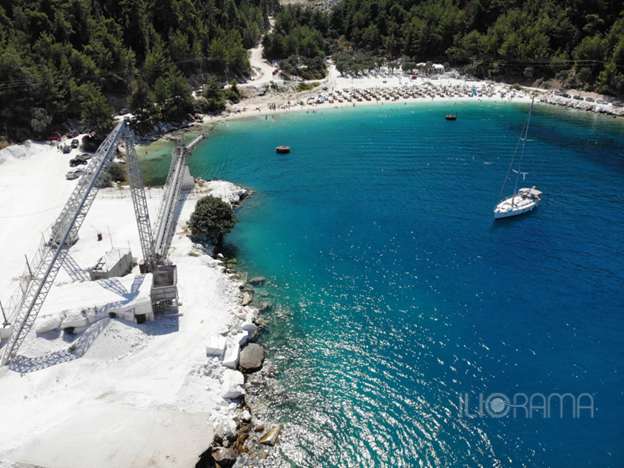
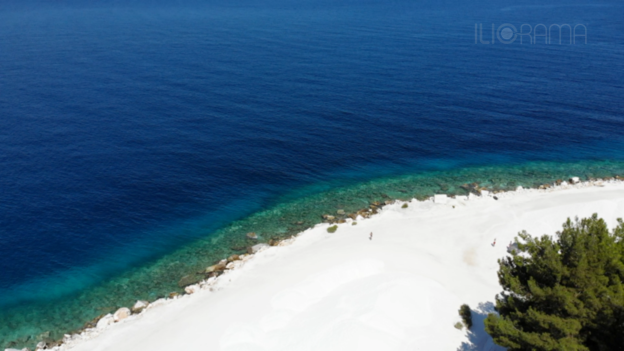
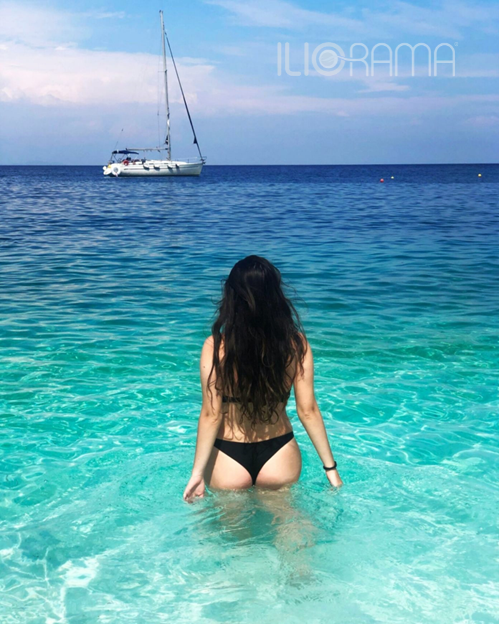
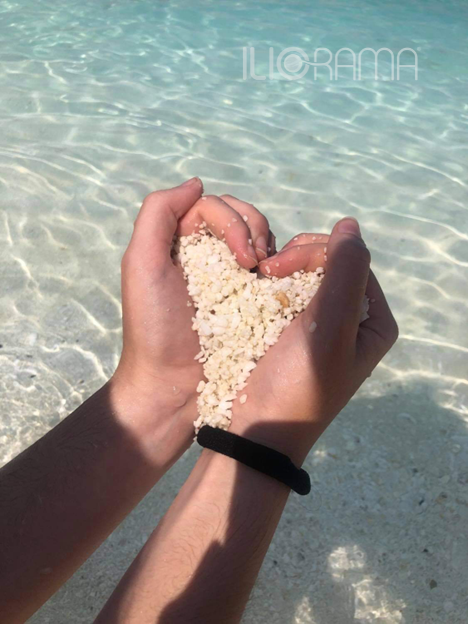
Modern mining activities on one of the island’s seaside cliffs transformed two of its small coves into extraordinary beaches, likely the only ones of their kind in the world. Over the years, marble pebbles and dust from the active quarry on the cliff have made their way down to the sea. The waves smoothened them, pushed them closer to the shore and turned them from harsh stone fragments into smooth, rounded pebbles, Nature and human intervention worked together by accident to create something unusual: two small beaches a few hundred meters apart, both covered in smooth white marble pebbles instead of sand. The most popular and smaller one is called Saliara but it is commonly referred to as Marble Beach. The second one is Porto Vathy. The white colour of the pebbles gives the water a striking bright turquoise hue up to a certain distance from the coast after which the waters turn deep blue almost instantly where the pebbles end.
A few practical notes:
- The road to the beach is partly unpaved and bumpy.
- Arrive early or late in the afternoon during peak season. Dont forget to check our blog on why May is the best time to visit Thassos.
- The pebbles are smooth, but water shoes can help if you are used to sand.
- The road to Marble Beach can be closed when the fire risk on the island is high, so I would suggest not leaving it for your last day.
- You will probably need to wash your car after the trip.
- Both beaches have organized beach bars, but you can also roll out your own towel if you prefer.
A different Way to View the Island
Driving through the mountain villages you may notice something odd high on the mountainsides.
Whole sections of the hills appear almost “opened” or cut away, exposing bright white surfaces beneath the forest. These are active marble quarry areas, where extraction still takes place today. They are especially noticeable on the drive from Limenas to Golden beach, just before Panagia. The contrast is striking. Dense green pine trees interrupted by sharp white cuts in the mountain, visible even from the road for those paying attention. It is a reminder that beneath the island’s beaches and summer sun lies an industry and history that shaped Thassos long before tourism arrived.
And once you begin noticing the marble, you’ll start seeing it everywhere. Peeking through the mountains, hidden between small villages, mountain roads, and coastal paths, in fountains, in church courtyards, in old staircases and in details at the harbor. You’ll notice it shining under the sun, blending naturally with the endless blues that make Thassos unforgettable.